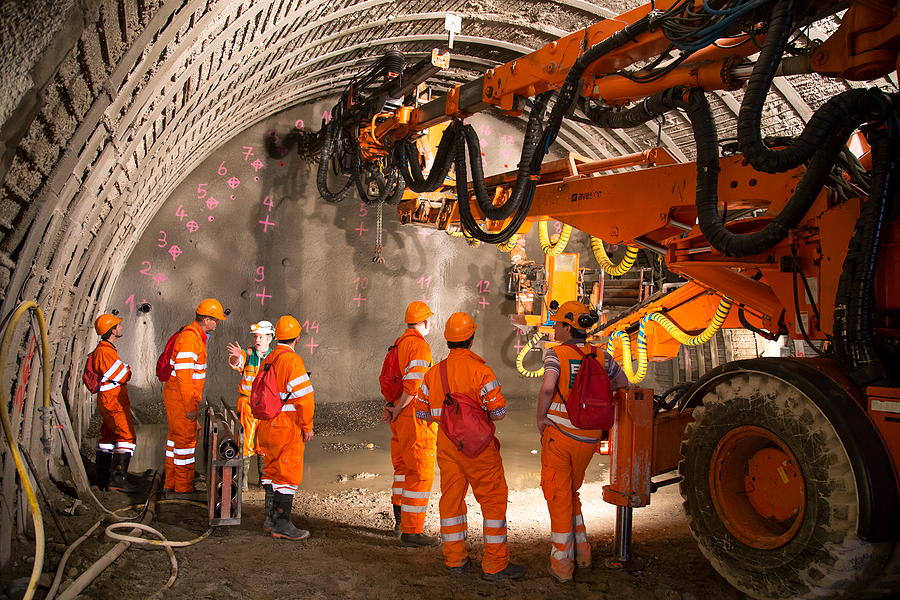
There is more than one kind of tunnel, but for the majority of those in the UK, reinforced concrete has a major role to play in ensuring the structural strength and water-resistance of the structure, so it can carry out its role, ranging from carrying cables to transport.
A particularly common use of reinforced concrete is in deep tunnels, where a tunnel boring machine cuts through the clay or stone and the concrete then protects the lining, with this being installed as the tunnel is constructed.
Among examples of this are the deep tunnels on the London Underground, as opposed to the cut-and-cover method used to establish the sub-surface tunnels that the oldest lines (dating back to 1863) still use today.
Both tunnelling methods are in use today, including on HS2, but for deep tunnels, reinforcement is usually necessary as the material that is easiest to excavate by tunnel boring machines is relatively soft, such as London’s boulder clay.
What Are The Main Upcoming Tunnel Projects In Britain?
Among the current and proposed future projects that will deploy such deep boring techniques and use reinforced concrete linings are:
- The Lower Thames Crossing between Kent and Essex
- The final HS2 tunnel between Old Oak Common and Euston
- Northern Powerhouse Rail, which will include underground lines in Liverpool and Manchester and an underground station at Manchester Piccadilly
- Proposed tunnels for the local transport system in Manchester, which could include mainline rail, Metrolink Tram and even standalone Tube-style Metro services
- Proposals to extend the Bakerloo line on the London Underground
- Plans to extend the Docklands Light Railway in east London to Thamesmead, including a tunnel under the Thames
- Possible extensions to the Glasgow Subway as part of the proposed new multi-modal Glasgow Metro system
These are all major projects or proposals and there may be more in the years to come, but even fairly small tunnels can benefit from the use of reinforced concrete frameworks.